tenable security center
48 Topics
Action Required: Preparation for January 2026 Tenable Security Center Feed Update
We are writing to announce an important upcoming change to the Tenable Security Center feed data. Starting in mid-January 2026, the size of Tenable Security Center feeds will increase due to the addition of new Vulnerability Priority Rating (VPR) data; this data will be available in Tenable Security Center 6.8, anticipated for release later in Q1 2026. This update ensures you continue to receive comprehensive vulnerability data, but it requires immediate action to ensure your environment is prepared. What you need to do To prevent the feed size from causing PHP memory exhaustion in your environment, please follow the resolution path for your specific version: Versions 6.5.1 – 6.7.2: Patch 202601.1 is now available. Applying this patch will automatically modify the PHP configuration to increase the memory limit. Versions Prior to 6.5.1: Follow the instructions outlined in this Knowledge Base article to modify the PHP configuration. Note: Tenable Security Center consoles with less than 8 GB RAM may need to have their hardware resources updated. Review Tenable Security Center hardware recommendations Why this matters Taking action now allows you to adopt a proactive approach to this feed expansion, ensuring your nightly updates continue seamlessly. Prevent SC Feed Update Failures: Without this fix, SC Feed updates may fail and log an "Allowed memory size... exhausted" error or terminate abnormally with error status '255'. Protect Disk Space: Failing feed updates can leave behind orphaned files in /opt/sc/data/feed.XXXXX folders, which may build up and cause disk space issues over time. Access our related documentation to learn more: Tenable Security Center Patch 202601.1 (2026-01-06) Knowledge Base: Tenable Security Center Feed Update Failing with "terminated abnormally with error status '255'" Due to PHP Memory Exhaustion7.5KViews4likes0CommentsTenable product update: Standardizing Tenable risk scoring
At Tenable, we are committed to providing the most accurate, defensible, and actionable view of organizational risk. To achieve this, we must continually refine the intelligence that powers your prioritization. On July 1, 2026, we are implementing a series of foundational updates to our risk scoring engines. As part of this update, you may see changes to your risk scores, depending on the Tenable product(s) you own. These changes simplify your workflow by standardizing scoring on a single, high-fidelity model for vulnerability and asset risk. The new standard for VPR For the past several months, many of you have utilized VPR (Beta) to gain deeper insights into exploitability. We are excited to announce that on July 1, this model will be promoted to the primary Vulnerability Priority Rating (VPR) across the Tenable platform. By standardizing on this advanced model, we are retiring legacy VPR scoring to ensure every customer benefits from our most sophisticated threat intelligence. The new version of VPR incorporates more threat intelligence and vulnerability metadata so that you can focus on the 1.6% of vulnerabilities that actually matter. Better context through enhanced asset classification Alongside the VPR update, we are enhancing our asset classification engine. This update improves how we identify the function and importance of assets across your entire attack surface, including Cloud, OT, and third-party devices. As a result, customers with access to Asset Criticality Ratings (ACR) for VM assets will see these scores more accurately reflect real-world business risk. What this means for you These are backend enhancements designed to provide immediate value with zero manual configuration. On July 1, your dashboards, reports, and APIs will automatically reflect these updated metrics. Because both VPR and ACR serve as inputs to Cyber Exposure Score (CES) and Asset Exposure Score (AES), customers using these scores may see changes that reflect a more accurate understanding of exposure. Customer FAQ What happens to the VPR (Beta) score in the Tenable UI? The Beta label will be removed. The high-fidelity model you’ve been previewing will become the standard VPR. The legacy version of VPR will be retired to ensure a single, unified source or truth. Do I need to rewrite my custom API scripts using VPR? No. For customers using APIs, updated values will be mapped into legacy VPR fields on the back end to ensure compatibility and a smooth transition for your scripts and third-party tools. How does this affect my SLAs? Because many organizations use VPR as their operational prioritization layer, your SLA statistics and remediation tracking will now reflect the more precise scoring model. This helps ensure your team is meeting response goals for the vulnerabilities that pose the highest actual risk. How does Enhanced Asset Classification affect my scores? The system now automatically identifies the function and criticality of assets across Cloud, OT, and third-party sources. This improved context leads to more accurate Asset Criticality Rating (ACR) adjustments. For customers with access to ACR, this ensures your most critical business assets are effectively prioritized. What actions does my team need to take, and when will the changes be reflected in my container? These updates will occur automatically within your Tenable console. Depending on the size of your environment, it may take time for score recalculations to be fully reflected across your console. For a detailed guide on our enhanced VPR, check out this FAQ. Want to see the why behind our scoring? View our scoring explained.7KViews9likes13Comments
Tenable Post-Quantum Cryptography Inventory Support
Summary The advent of quantum computing presents a significant threat to current cryptographic algorithms. Organizations worldwide are beginning the critical transition to post-quantum cryptography (PQC) resistant algorithms to ensure long-term data security. Government mandates, such as the U.S. National Security Memorandum 10 (NSM-10), outlines deadlines for PQC migration and specific actions agencies must take to migrate vulnerable systems. Our PQC support is designed to help customers inventory use of TLS and SSH quantum-resistant and vulnerable algorithms within their infrastructure using remote Nessus-based scans. Cipher Inventory and Reporting Post-Quantum Cipher Plugins Two remote-based scan informational reporting plugins for TLS and SSH protocols inform customers of their transition posture according to NIST Post-Quantum Encryption Standards. Services Using Post Quantum Cryptography: Reports on services equipped with at least one post-quantum cipher. It will specify which post-quantum ciphers were discovered, reporting by port and protocol. Services Not Using Post Quantum Cryptography: Reports on services that support no post-quantum ciphers. These plugins will be enabled by default and included in existing scans. Cryptographic Inventory Plugin Reporting To enable a JSON-based inventory of each target by service and cipher, enable through either a preference on your Advanced Network Scan or by running the Cryptographic Inventory scan template. These preferences will initially be supported in Nessus and Tenable Vulnerability Management. They are planned to be added to Tenable Security Center at a later date. Warning: Enabling this preference through the Advanced Network Scan is expected to increase the overall size of the plugin output per target and resulting Nessus database size. If you do not need to produce this inventory at all or on your regular scan cadence, it’s recommended to instead run the Cryptographic Inventory scan template to decrease the potential impact to your normal scan results. Options to Enable Inventory Reporting Advanced Scan Preference Post Quantum Cryptography Scan Template Cryptographic Inventory Plugin Details The plugin enabled with the preference or scan template is an information plugin called Target Cipher Inventory. Within the output of this plugin, you will find a JSON structure containing the TLS and SSH inventories for the scanned target. You can export this inventory based on plugin output using the Tenable API if needed. For TLS, the structure contains: Attribute Definition Encaps Protocol encapsulation employed such as TLSv1, TLSv2, TLSv3 Port Port used for TLS communication Curve Group Encryption method Ciphersuite Algorithm used to secure the TLS connection For SSH, the structure contains: Attribute Definition Proto Protocol of SSH Port Port used for SSH communication Name Algorithm used to secure the protocol Type Use of the named algorithm such as “message auth” Release Date Tenable Vulnerability Management and Tenable Nessus: December 8, 2025 Tenable Security Center: - December 8, 2025 for the informational plugins - Cryptographic Inventory scan template release to be determined
Improvement: Handling Component Installs for Vulnerability Assessment
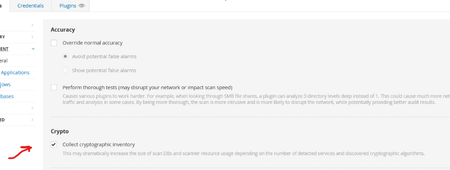
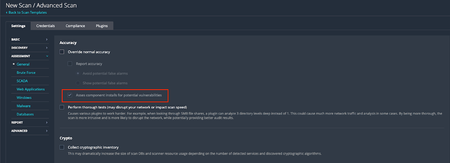
Background On Friday, February 6, 2026, Tenable Research published a plugin update that changed the way component installs are assessed for vulnerabilities. Those changes are outlined in a previous release highlight: Component Installs Require Paranoid Checks, This update essentially reverts this change, while adding new functionality to allow users to choose whether or not they want component installs assessed for vulnerabilities. Component installs are no longer influenced by scan paranoia settings. What are “Component Installs”? Software components, such as applications or language modules/libraries, are installed and managed by a primary "parent" package or application. The crucial point is that these components often cannot be updated individually. Instead, their vulnerability assessment and upgrade are entirely dependent on an update of the parent package. For instance, the SQLite database component is installed as part of the Trend Micro Deep Security Agent and is updated only when the Agent itself is updated. Nessus uses several factors to determine if a detected product is a component, or a standalone installation, including: Was the product installed by a package manager? These products are not considered components, as they are managed by the package manager and not a “parent” application Is the component a “language library”, i.e. a library or module used by the interpreter of a programming language like Python or Node.js? These enumerated libraries are marked as components by default. Does the product reside in a directory that is recognized for installations that are not component-based? Changes By default, component installs are once again assessed for vulnerabilities, as was the case prior to the release of the aforementioned update. If users wish to turn this setting off, so that component installs will not be assessed by generic vulnerability detection plugins, they can do so via the newly created scan preference. The end result of this change should be that fewer “false positives”, i.e. reported vulnerabilities for components that are “owned” by another application, are shown in scan results. Components with vulnerabilities that cannot be addressed independently of the “parent” application will not show in scan results. However, some customers have expressed a desire to see these vulnerabilities in their scan results anyway, to ensure full awareness of the risk profile of every application in their environment. This is still possible through the updated scan configuration settings. To modify this setting in your scan policy, go to Settings > Assessment > Accuracy > Override Normal Accuracy > Assess component installs for potential vulnerabilities. This setting is ON (checkbox is ticked) by default, so users must enable the Override Normal Accuracy checkbox (which is OFF / unchecked by default) if they wish to disable the setting and ensure that component installs are not assessed by generic vulnerability detection plugins in this scan. Please note that this update makes no other changes to the existing paranoia logic, outside of what is described above. For now, “Managed”, “Managed by OS” and “Backported” installs are still controlled by the Show/Avoid potential false alarms radio button. How can I tell if the detected install is a component or not? In addition to the above, we have also updated the relevant detection plugins so they will show if the component flag is set or not. At present, this includes detection plugins for OpenSSL, Curl, LibCurl, Apache HTTPD, Apache Tomcat, SQLite, Python Packages, Node.js modules and, soon to follow, Ruby and Nuget libraries. Using plugin ID 174788, SQLite Detection (Windows), here is a before and after example of the expected plugin output. Before: After: Expected Impact With the new default setting in place, users should anticipate an increase in vulnerability findings for the products in scope, returning to a level similar to what was observed before the first update. If users do not wish to surface these additional potential vulnerabilities, they should disable the "Assess component installs for potential vulnerabilities” setting. If the new scan preference is disabled, the volume of findings will remain consistent with current levels, when scanning with normal accuracy (paranoia) settings. Affected Plugins 12288, global_settings.nasl (updated to support the new scan policy preference) Any plugin that operates downstream of those in the list below: SQLite: 174788 - sqlite_nix_installed.nasl 171077 - sqlite_win_installed.nasl OpenSSL: 168007 - openssl_nix_installed.nasl 168149 - openssl_win_installed.nasl Curl: 182774 - curl_nix_installed.nasl 171860 - curl_win_installed.nasl LibCurl: 182848 - libcurl_nix_installed.nasl Apache HTTPD: 141394 - apache_http_server_nix_installed.nasl 141262 - apache_httpd_win_installed.nasl Apache Tomcat: 130175 - apache_tomcat_nix_installed.nasl 130590 - tomcat_win_installed.nasl Python Packages: 164122 - python_packages_installed_nix.nasl 139241 - python_win_installed.nasl Node.js Modules: 178772 - nodejs_modules_linux_installed.nasl 179440 - nodejs_modules_mac_installed.nasl 200172 - nodejs_modules_win_installed.nasl Targeted Release Date Tenable Nessus and Vulnerability Management: Monday, March 9, 2026 (ETA 22:30 Eastern Standard Time) Tenable Security Center: Monday, March 16, 2026Introducing Tenable Security Center 6.8
Our latest release, Tenable Security Center 6.8, introduces several new features and enhancements to streamline your security operations: Focus on real risk: Stop chasing 60% of Common Vulnerabilities and Exposures (CVE) as High or Critical. Start focusing on the 3% of CVEs that truly matter. Enhanced VPR logic and new AI-powered insights explain why an exposure is significant and provide clear mitigation guidance based on regional and industry-specific threat actor behavior. Streamlined infrastructure: We’ve unified IPv4, IPv6, and Agent repositories into a single, flexible Asset Repository type to reduce administrative overhead and give you more freedom in how you bucket and analyze your data. You can now target any data, including agent, network scan, and passive data, into any repository. Asset grouping and customization: The Explore Assets page includes new "Group By" options for Microsoft ID, Network, System Type, and Asset Criticality Rating (ACR). Other enhancements to the Explore Assets page include the ability to edit ACR scores (available in Tenable Security Center Plus) directly in the Explore interface. You can also export findings and installed software for specific assets to a comma-separated values (CSV) file. Background queries: Start a query and keep working. Tenable Security Center now processes long-running asset searches in the background. Scan optimization: Prevent performance issues with new per-host timeouts that keep your scan schedules on track to prevent a single host from increasing overall scan time. Enhanced security: Use at-rest encryption for External PostgreSQL databases and expanded PAM integration for Delinea and BeyondTrust. Before you upgrade: Tenable Security Center 6.8 supports upgrades from version 6.4.0 and later. Please review the latest updates to Tenable Security Center hardware specifications in the release notes for optimal performance.1.5KViews1like0CommentsNow available: VM-Native OT Discovery
VM-Native OT Discovery introduces a powerful new asset discovery engine directly inside Tenable Vulnerability Management and Tenable Security Center. This allows you to identify and profile OT assets—including PLCs, HMIs, and IoT devices—using the VM tools you already own. Use a new "OT Recon" scan template to perform safe, protocol-aware active queries. No additional hardware or sensors are needed. Get started in minutes. Discovered assets count toward your existing license at a 1:1 ratio. Watch this 2-minute guided demo to see VM-Native Discovery in action. For more information, please refer to the user guides for Tenable Vulnerability Management (Discovery Settings, Scan Templates) and Tenable Security Center (Scan Policy Options). For continuous monitoring and access to a wide range of other advanced OT/CPS security capabilities, consider upgrading to Tenable OT Security to maximize the value of your Tenable One deployment.1.3KViews1like0CommentsImprovement to Printer OS Fingerprinting
Updated: April 3, 2026 Summary Scanned printers will now have an OS artefact surfaced in their scan host metadata if the target has been identified as a printer when the “Scan Network Printers” policy option is disabled. This change will not cause any additional asset licenses to be consumed within Tenable VM or Tenable Security Center. Background Printers are notoriously unstable scan targets. Oftentimes, they can behave erratically when scanned, so some users prefer to avoid scanning them altogether. At present, there is a switch in the scan policies to prevent further scanning of a host when it's identified as a printer. To enable this setting, go to Settings -> Host Discovery -> Fragile devices - Scan Network Printers (Currently, this is a checkbox setting, default value “off”). With that said, how can the scanner know the target is a printer if it cannot be scanned? In reality, the scanner still performs very basic fingerprinting (usually via SNMP) in order to gather enough information to make an educated guess at the device type. When the scan target is thought to be a printer, it essentially gets marked as “Host/dead" in the scan KB. When this happens, the scanner will not perform any further active scanning. Changes With this update, the fingerprint used to identify the printer as such, will now be stored in the scan Knowledge Base (KB) so it can be processed by os_fingerprint2.nasl ("Post-scan OS Identification", plugin ID 83349) and surfaced as metadata in the scan result. The relevant policy setting located at Settings -> Host Discovery -> Fragile devices -> Scan Network Printers. With this update, the printer's OS information will now be surfaced if it is available, regardless of the selected value for this setting. Impact Users can now see the OS information for their printer devices that would have otherwise gone unreported if the scan is not configured to “Scan Network Printers”. As plugin ID 83349 generates no plugin output, only an “operating-system” tag will be added to the scan result (and stored in an exported .nessus file). This information will be visible only the in “Host/Asset Details” section of the Tenable product UI, i.e: Tenable Nessus: Scans -> [Folder] -> [Individual Scan Result] - > Host Details -> OS (sidebar) Tenable Vulnerability Management: Explore -> Assets -> [Asset] -> Details -> Operating System Scans -> Vulnerability Management Scans -> [Individual Scan Result] -> Scan Details -> Asset Details -> Operating System Tenable Security Center: Analysis -> IP Summary -> [IP address] -> System Information -> OS Scans -> Scan Results -> [Individual Scan Result] -> IP Summary -> [IP address] -> System Information -> OS Note, we expect this information to surface mainly in individual scan results. It would only be present in cumulative asset details if a licensed asset already exists for the target in question. This update will not cause additional assets to be created or consume any additional licenses. Affected Plugins 83349 - os_fingerprint2.nasl 11933 - dont_scan_printers.nasl 22481 - dont_scan_settings.nasl Targeted Release Date Wednesday, March 4, 20261.3KViews2likes2CommentsIntroducing Tenable Security Center 6.9.0
We're excited to announce that Tenable Security Center 6.9.0 is now globally available. This release delivers a modernized vulnerability findings UI, expanded scanning flexibility, and stronger security foundations — built on feedback from our customer community. What's new? Explore Findings — A modernized vulnerability query interface with expanded filtering (severity, asset, plugin, IP-based) and VPR key driver fields right in the findings detail panel. The legacy Analysis view is still available alongside it. Nessus Scanners via Sensor Proxy — Link Tenable Nessus scanners through the Sensor Proxy service for more flexible deployments and horizontal scaling in large enterprise and Tenable Enclave Security environments. Diagnostic Bundle Auto-Upload — Submit Security Center diagnostic files straight to Tenable Support from the console — no more manual download/re-upload. (Requires a valid Tenable Nessus feed license; not supported in air-gapped environments.) Windows LAPS Credential Support — Scan credentials can now be retrieved dynamically from Active Directory via Windows Local Administrator Password Solution. PAM Kerberos Target Authentication — Kerberos Target Authentication is now supported for Windows and SSH credentials across integrations including BeyondTrust Password Safe, Delinea Secret Server, and CyberArk. FIPS 140-3 — SC 6.9.0 integrates OpenSSL 3.5 with the FIPS provider, moving toward full FIPS 140-3 compliance (currently undergoing NIST validation). Other notable enhancements Trending Data Migration to PostgreSQL — Trending data now lives in PostgreSQL instead of legacy file storage, reducing disk usage and paving the way for expanded trending capabilities. Existing trend data carries over automatically. Note: trend charts modified/created on 6.9.0+ will start their trend history from the edit/creation date. Freeze Window Rollover Scan Control — New option to suppress automatic rollover scan creation during freeze windows, preventing backlog buildup after large maintenance windows. Section 508 Accessibility — Improvements to screen reader support and keyboard navigation. Overall performance and stability improvements, plus 60+ customer-reported bug fixes. Upgrade considerations Upgrades are supported from Security Center version 6.5 and above. This release includes [R1] Security Center Version 6.9.0 Fixes Multiple Vulnerabilities. 8GB RAM is now a requirement — upgrades/installs will not proceed below this. Upgrade time from version 6.7+ depends heavily on the number of trending charts in your Reports; consoles with hundreds/thousands of trend components may take several hours. Running the RPM installer from a separate /tmp partition requires 10GB free space. Resources Release notes User guides Download Tenable Security Center 6.9.0 Have a question? Leave a comment below or contact your Tenable representative.1KViews0likes0Comments
Tenable Product Update Newsletter - September 2026
Welcome to your monthly round-up of the latest Tenable product updates, platform enhancements, and community news. This month, we’re bringing frontier AI reasoning into exposure management, deepening cloud and vulnerability visibility, and expanding how the community vets AI agents before deployment. Tenable One - Platform updates Claude Mythos 5 is coming to Tenable One with Adversary View Attackers don’t exploit systems in isolation. They chain together scattered, low-signal evidence like netstat entries, cached accounts, and active connections that traditional rules engines can’t connect, and that your team doesn’t have time to piece together manually. This is where frontier AI models shine. Tenable One Adversary View, launching this September, brings the power of Anthropic’s Claude Mythos 5 directly into the Tenable One Exposure Management Platform. Built on the Project Glasswing collaboration between Tenable and Anthropic, Adversary View applies advanced cyber reasoning to your existing exposure data, uncovering hidden vulnerability chains, visualizing how an attacker would actually move through your environment, and surfacing evidence-backed fixes to break those chains before attackers exploit them — all within an agentic harness that keeps the AI’s reasoning controlled and auditable. Take advantage of Claude Mythos 5 to tackle complex exposure management challenges. Cut through the noise with a ranked, prioritized list of the vulnerability chains that matter most, backed by evidence and specific remediation guidance. Move at the speed of adversaries by pairing Claude Mythos 5’s advanced reasoning with the exposure intelligence you already have in Tenable One — no new tools required. Read the blog post Explore the guided demo 3 new connectors bring GitHub and GitLab findings into Tenable One Tenable One connectors combine your third-party security tools with Tenable’s native sensor data for one view of risk across your attack surface. Three new connectors extend that coverage, pulling static application security testing (SAST), software composition analysis (SCA), and secret scanning findings straight into Tenable One. GitHub Code Scanning: Consolidates SAST and secret scanning findings, covering both vulnerable code and exposed credentials, into the same risk view as every other exposure you track. GitHub Dependabot: Brings SCA alerts on vulnerable dependencies, so a flawed package deep in your supply chain gets prioritized against everything else exposing you. GitLab Connector: Covers SAST, SCA, and Secret Detection findings in one connector, consolidating what’s otherwise split across multiple tools into a single risk view. Requires GitLab Ultimate to ingest findings. All three are native connectors; add the connector, and findings start showing up in Tenable One. Set up GitHub Code Scanning Set up GitHub Dependabot Set up GitLab Connector CyberAgents Exchange Exchange Inspector vets AI agents before they reach your environment Tenable and OpenAI unveiled the CyberAgents Exchange AI Inspector, which pairs OpenAI’s GPT cyber models with Tenable One AI Exposure and expert researcher review to screen AI agents, skills, MCP servers, and multi-agent playbooks for prompt injection, PII exposure, and supply-chain risks before they’re deployed. Combines OpenAI GPT cyber models, Tenable One AI Exposure, and expert researcher review to vet AI agents before deployment. Screens AI agents, skills, MCP servers, and multi-agent playbooks for prompt injection, PII exposure, and supply-chain risks. Gives practitioners insight into production-ready AI agents and CISOs the confidence to approve their use. The Exchange Inspector builds on the CyberAgents Exchange registry, which has already drawn more than 100 AI listings. Exchange Inspector is expected to be available in September. Read the technical blog Read the press release Tenable One Vulnerability Management Visualize your security trends over time You can finally see exactly where your security metrics are heading, not just where they stand today. With newly added Trending Widgets, you can track your asset data and findings as daily line charts, giving you the historical context you need to accurately monitor your progress. Data collection begins the moment you set up a widget. To get started, you can: Build custom views: Add up to five unique trend lines per widget, tailoring the dataset, entity type, and filters for each. Deploy pre-built charts: Search trending in the widget library to drop ready-to-use visualizations right onto your dashboard. Check out the Trending Widget documentation Release notes for the full details Tenable One Cloud Exposure Expanded Kubernetes and container topology in Tenable One Cloud Exposure A comprehensive overview of Kubernetes and container topology is essential for risk-based prioritization because you have to see the whole picture of the resources, workloads, and clusters a vulnerability touches to know what’s actually risky. Now, the “graph” tab in Tenable One Cloud Exposure gives you the full structural layout of a Kubernetes cluster, all the way down to a vulnerable container image, in one interactive view. What’s new: Guided relationship picker: By expanding any node in the graph, it now surfaces a categorized menu (Compute, IAM, Kubernetes, Containers, Management, Network, Risk) so you can choose which connection to explore next. Full Kubernetes depth: Namespaces, roles, role bindings, service accounts, configuration maps, and workloads all surface as first-class nodes, whether the cluster is EKS, AKS, GKE, or self-managed. The Kubernetes graph provides a holistic view of cluster contents, namespaces, and resource relationships, while allowing you to effortlessly navigate from clusters to underlying virtual machines and specific workloads, such as business-critical services. It also enables you to explore vulnerability instances linked to container images, ensuring they have complete context for risk prioritization and informed decision-making. View the demo Check out the product documentation Tenable Nessus Nessus reliability and performance updates We have released several Tenable Nessus updates recently, with a mix of new capabilities as well as improvements related to performance and security. Scanner reliability fixes: Resolved SSL connection issues that could cause scanners to appear offline and stop receiving plugin updates. Kerberos authentication fix: Corrected an issue blocking plugins from retrieving host FQDNs, causing authentication failures. Tenable Security Center performance: Fixed timeout errors when processing large volumes of Tenable Nessus agent reports. Certificate handling: Resolved an issue in PostgreSQL client authentication. Review Nessus documentation Read the Plugin Release Notes Take Tenable University training Training and product education Tenable Patch Management training Upgrade your skills with the refreshed, free on-demand Introduction to Tenable Patch Management course in Tenable University. Modernized with interactive elements, real-time knowledge checks, and step-by-step video demonstrations, this self-paced web training gives you hands-on practice to efficiently secure both your SaaS and on-premises environments. Through this updated course, you will learn to: Understand core architecture: Master essential server and client components, operating system coverage, and fundamental patching logic. Optimize configuration and strategy: Configure locations and business units while implementing proven patching strategies across your enterprise. Execute global operations: Swiftly respond to critical threats using the Emergency Kit. Eliminate blind spots: Monitor real-time compliance health and identify hidden vulnerabilities using dynamic performance widgets and interactive dashboards. Access this free course today in Tenable University to strengthen your remediation workflows and keep your organization secure. Learn more Tenable events and webinars Customer office hours Customer office hours are recurring ask-me-anything sessions for Tenable Security Center, Tenable One Vulnerability Management, Tenable One Cloud Exposure, Tenable One Identity Exposure, and Tenable One OT Exposure. Time-zone-appropriate sessions are available for the Americas, Europe (including the Middle East and Africa), and Asia-Pacific. Learn more and register Virtual events Tenable customer update - October 2026: Join the next quarterly customer update session at 11 a.m. ET / 4 p.m. BST / 5 p.m. CEST Oct. 20. This informative, fast-paced overview will explore how to better secure your expanding attack surface and consolidate critical security data. Products covered include Tenable One, Tenable One Vulnerability Management, Tenable Security Center, and Tenable Patch Management. Register here See all upcoming live and on-demand webinars TenableTalk Live: How Mythos will change cyber defenses forever: Join us at 11 a.m. ET, Thursday, Sept. 24, on LinkedIn as we dive into what happens when frontier AI reasoning gets built directly into the tools defenders use, and how teams can prepare for these new capabilities. Attend on LinkedIn Tenable Professional Services Tenable Hexa AI enablement workshop Confidently adopt Tenable Hexa AI and the Tenable Hexa AI Model Context Protocol (MCP) Server with expert, hands-on guidance tailored to your environment. Delivered by Tenable Professional Services as a custom Statement of Work (SOW) engagement, this new workshop equips your team with practical skills to maximize your AI-driven exposure management capabilities. Through this custom engagement, you will: Explore enterprise AI capabilities: Analyze your internal AI tool usage and complete a technical overview of Tenable Hexa AI. Build practical expertise: Receive hands-on instruction to effectively operate Tenable Hexa AI and integrate the Tenable MCP Server into your tech stack. Design custom workflows: Develop tailored operational workflows and implement proven best practices to accelerate risk reduction. To scope a custom workshop for your organization, contact your Tenable representative or email [email protected]. Read Tenable documentation.800Views0likes0CommentsTenable Product Update Newsletter — August 2026
Welcome to your monthly round-up of the latest Tenable product updates, platform enhancements, and community news. This month, we’re focused on agentic automation, quantum-readiness, and sharper visibility across your attack surface. Tenable One Platform Updates Tenable Hexa AI now supports Routines and Agent Center in Tenable One Introducing the next major evolution in agentic security: an always-on workforce powered by Tenable Hexa AI Routines, Agent Center, and a new Jamf integration directly within the Tenable One platform. Moving past conversational search and one-off actions, mobilize an autonomous fleet that runs in the background to seamlessly coordinate multi-step security tasks across your entire exposure landscape. Routines: Define an exposure workflow once and set a schedule. Hexa reasons through fresh context on every run and automatically delivers actionable results. Agent Center: A central workspace to track all routines to get clear visibility into what’s running, completed, queued, or awaiting user input. Jamf integration: Fetch Jamf-managed Mac context on demand and push patch policies directly back to Jamf without ever leaving Tenable One. Available now. Get started by navigating to Agent Center > Create a Routine or the Routines tab in Hexa AI. Get more details in the release notes CyberAgents Exchange CyberAgents Exchange and SWARM event recap The CyberAgents Exchange, powered by Tenable, is an open-source, vendor-agnostic hub where security practitioners and CISOs can discover, share, and collaborate on AI agents, skills, MCP servers, and playbooks built for cybersecurity. This free-to-use community infrastructure allows defenders to scale their capabilities, eliminate development silos, and outpace AI-generated threats without vendor lock-in. In conjunction with the CyberAgents Exchange launch, Tenable hosted SWARM, a hands-on cybersecurity agentic AI build event at Black Hat USA 2026 in Las Vegas. Real-world solutions: Sponsored by AWS and presented with support from Anthropic, the event challenged security practitioners to build open-source components that automate real-world security workflows. Winners: Congratulations to our first-, second-, and third-place winning teams! Your incredible builds are now on the CyberAgents Exchange for the global security community to adopt and build upon. Explore the CyberAgents Exchange today, and check out our official press release and SWARM recap blog post for complete details. Explore the CyberAgents Exchange Read the SWARM recap blog Read the press release Tenable One Vulnerability Management Accelerate software discovery and compliance reporting in Explore Seamlessly track software inventory and isolate compliance checks directly within Tenable One Vulnerability Management. The new Software and Host Audit tabs in Explore deliver dedicated views to eliminate UI clutter, track deployed application footprints, and speed up audit reporting. Use these views to: Pinpoint software exposure: Search installed software, versions, and vendors alongside risk metrics like ACR and AES to maximize SBOM value. Isolate compliance findings: Separate CIS benchmark and hardening checks from general vulnerability noise without building complex filters. Export audit evidence: Instantly group and export targeted software inventories or configuration results for internal teams and external auditors. Read the full post on Tenable Connect Tenable One AI Exposure Now covering all major AI platforms and developer tools AI adoption is outpacing most teams’ ability to govern it, and every new LLM, agent, or IDE plugin adds another blind spot to the attack surface. Tenable One AI Exposure closes that gap further, adding support for Google Gemini and extending coverage across the tools where AI actually gets used inside your environment. Expanded coverage and capabilities include: Full LLM coverage: Monitor prompts, responses, and usage patterns across Google Gemini, Anthropic Claude, OpenAI ChatGPT Enterprise, and Microsoft Copilot, with policy enforcement and detection of risky or unauthorized activity. Broader shadow AI visibility: Discover sanctioned and unsanctioned AI use across Model Context Protocol (MCP) deployments, AI-native IDEs like Cursor, Windsurf, and Trae, and AI-enabled browser extensions. Faster remediation workflows: Route policy violations straight into Jira or ServiceNow, or trigger automated alerts over email, Slack, or Teams, so issues get worked instead of just logged. Read the Tenable One AI Exposure press release Tenable One Cloud Exposure Identify non-compliant post-quantum cryptography cloud resources Encrypted traffic captured today can be stored and decrypted later, once quantum computing matures, a threat known as harvest-now-decrypt-later (HNDL). Organizations relying on outdated Transport Layer Security (TLS) configurations or non-quantum-safe encryption are exposed to this risk without even knowing it. Tenable One Cloud Exposure now helps customers identify non-compliant post-quantum cryptography (PQC) cloud resources to support future compliance regulations. We’ve added four new properties to the Network Endpoint profile for HTTPS-supported endpoints. The enhancement allows teams to: Get visibility into quantum readiness: See which endpoints already support post-quantum cryptography and which don’t, so you can prioritize upgrades ahead of emerging compliance mandates. Get all non-PQC-compliant resources listed in one query. Identify weak encryption faster: Surface outdated TLS versions and vulnerable cipher suites across your environment without manual audits or separate scanning tools. Reduce HNDL exposure: Proactively harden key exchange methods and ciphers before intercepted traffic becomes a future liability. Gain compliance evidence: Customers in regulated industries, such as healthcare and financial services, can easily prove compliance as quantum computing matures. To find these resources in your cloud environment, go to Tenable One Cloud Exposure and filter or query “non-ready PQC resources” using the Network Endpoint page or Explorer. Check out other recent releases in the product documentation Tenable One OT Exposure Deeper IT/OT visibility for every corner of your environment Our latest release of Tenable One OT Exposure 4.7 expands visibility for grid operators and disconnected environments, and introduces a variety of productivity enhancements. OT agents for isolated networks: Get asset visibility and vulnerability coverage in air-gapped and disconnected environments (no sensors or live connectivity required) with offline scan profiles and a local agent UI for field technicians. Power substation anomaly detection: Passively monitors GOOSE streams and flags anomalous activity, such as configuration revision changes, giving utilities and grid operators critical visibility. Yokogawa DCS activity detection: Surfaces critical operational changes on Yokogawa Centum VP systems, so you can spot engineering activity that may signal unauthorized access. Centralized subnet management: Define CIDR boundaries and toggle monitoring across all ICPs from a single interface in Enterprise Manager, eliminating per-site configuration. Saved Views: Save, name, and reuse custom filter combinations across asset and findings views, cutting down repetitive setup during investigations. Asset side panel: Review asset details without leaving the findings or asset grid, for faster pivoting during investigations. Upgrade today to put these new capabilities to work in your environment. Explore the release notes Tenable Security Center Sharper visibility, streamlined operations The latest release of Tenable Security Center 6.9 brings several upgrades to help you accelerate your self-hosted vulnerability management program. Updated vulnerability findings interface: Rich filtering options (severity, asset, plugin, IP-based) and surfaced Vulnerability Priority Rating (VPR) insights help you zero in on what matters most, faster. Tenable Nessus scanner support via Sensor Proxy: Link Tenable Nessus scanners through the Sensor Proxy service for more flexible deployments and horizontal scaling across large enterprise and Tenable Enclave Security environments. Windows LAPS credential support: Dynamic credential retrieval from Active Directory (AD) strengthens scan security and reduces the admin burden of credential management. Expanded PAM Kerberos authentication: Support across BeyondTrust, Delinea, and CyberArk integrations gives you tighter credential control. One-click diagnostic bundle upload: Submit diagnostic files directly to Tenable Support from within your console, so we can resolve your cases faster. (Requires a valid Tenable Nessus feed license. Not supported in air-gapped environments.) Trending data moves to PostgreSQL: A lighter disk footprint and better performance for your trend reporting. Explore the release notes Tenable Nessus Stability fixes and continued security hardening with the latest Tenable Nessus releases Tenable Nessus 10.12.2 and 10.12.3 are now available, resolving a scanner connectivity issue and rounding out a batch of stability fixes: Your scanners stay online and up to date: We’ve addressed a bug where scanners could drop offline and stop receiving plugin updates after an upgrade, so you get consistent scan coverage without needing to manually check scanner status. Fewer stuck or incomplete agent scans: Cluster-based agent scans will finish reliably, so you will not need to re-run them. More accurate reporting on linked agents: You can always trust what you see in the console (requires Tenable Agent 11.2.0 or later). Want to see Tenable Nessus in action or level up your team’s skills? View a Tenable Nessus demo or purchase our on-demand training course. What these updates mean for you: If you were experiencing scanners going offline or missing plugin updates, updating to 10.12.3 will solve it. Tenable Agent customers should update to v11.2.0 or later to get the linked-agent plugin reporting fix. Review the release notes Tenable Nessus Professional data sheet Tenable Nessus Expert data sheet Tenable Patch Management Instant patch verification and expanded Linux support This latest update focuses on saving you time and verifying your fixes faster. Instantly verify patches: Automatically trigger a Nessus Agent scan the moment a patch finishes installing. You get immediate proof of CVE remediation without waiting for your next scheduled scan window. Natively patch EPEL packages: Update community-maintained add-on software across your Enterprise Linux distributions on the exact same schedule as your core OS, eliminating the need for custom scripts. Stronger security and faster performance: Benefit from upgraded AES-GCM encryption, easier TLS certificate management directly from your console, faster dashboard load times, and fixes that keep your maintenance windows accurate to prevent unwanted reboots. Read the full details on Tenable Connect Training and Product Education Tenable One Cloud Exposure Specialist Training refreshed in Tenable University The instructor-led Tenable One Cloud Exposure Specialist product training in Tenable University is rebuilt with modernized content and hands-on lab exercises. All labs and course content now reflect the latest user interface and recent feature releases. Learn more Buy instructor-led training Tenable Events and Webinars Virtual events Tenable customer update, July 2026: Watch the most recent quarterly customer update session. This informative, fast-paced overview explores how to better secure your expanding attack surface and consolidate critical security data. Products covered include Tenable One, Tenable One AI Exposure, Tenable One Vulnerability Management, and Tenable Security Center. Watch the July customer update Live from SWARM: An announcement to shift the future of agentic AI security. Watch the replay of a special 15-minute session streaming directly from SWARM, our exclusive agentic AI build event at Black Hat USA 2026. The session dives into the realities of AI-augmented exposure management and a special announcement that will change how the infosec community collaborates on AI security. Watch on LinkedIn --- Read Tenable documentation.800Views1like0Comments