Where Capability Meets Opportunity: Meet the Tenable Research Special Operations Team
The digital battlefield is constantly shifting. It's no longer enough to just react. We need to anticipate. But what if there was a team dedicated to seeing these threats coming, understanding advers...1 year agoPlace Tenable Research Release HighlightsTenable Research Release Highlights1 unread comment1 unread259Views6likes1Comment

Forum Widgets
Recent Discussions

Nessus now has Windows LAPS Support
Summary: Nessus now has the ability to leverage accounts managed by Microsoft Windows LAPS. How LAPS works: Since LAPS managed accounts have their passwords rotated routinely, users cannot just directly provide the credentials in their Scan Policy. Before this change, users would instead have to make an additional privileged account on each LAPS enabled Host to provide to Nessus. Currently Nessus supports Entra LAPS allowing a scan to pull LAPS Managed Credentials from a customer’s remote Entra instance. Now, Nessus can do the same for Windows LAPS, allowing customers with local LAPS setups to gain the same benefits! Without Windows LAPS support, customers must make dedicated account for Nessus to use to scan targets Change: With this LAPS support change, during the startup phase of a scan, Nessus will reach out to a customer provided Domain Controller hosting an AD forest with LAPS enabled, and pull a list of all Local Admin Accounts for devices managed by LAPS. Nessus will then attempt to use these retrieved LAPS managed accounts as credentials when attempting to access a target host. With Windows LAPS Support, Customers need only provide a single Credential that allows Nessus to retrieve the actual credentials for LAPS Managed Devices How to enable it: To make use of Nessus’ Windows LAPS support, a customer needs only to provide the necessary info to their scan/policy via the Windows LAPS Credential. They’ll need to provide us the IP of the DC, Credentials for an account on that DC with the necessary permissions*, and the DistinguishedName of the OU that contains their LAPS managed devices. *The Account for retrieving Windows LAPS credentials needs the following permissions General Recommend the Account be added to the BUILTIN/Administrators AD Group as it grants all required permissions, including: Access to the $Admin Able to log on to the DC remotely Able to run Powershell WMI and DCOM access to Root/CIMV2 WMI Namespace LAPS Permissions LapsADReadPasswordPermission rights to the LAPS OU Be an Authorized Password Decryptor in the LAPS GPO (without this, Nessus will not be able to retrieve passwords protected by LAPS Encryption). Members of the Domain Administrators group are Authorized Password Decryptors by default. For additional information see: https://learn.microsoft.com/en-us/windows-server/identity/laps/laps-overview Impact: Customers using Rotating Host passwords managed through Microsoft Windows LAPS can now leverage these credentials in their Nessus scans for more secure scanning configurations. Target Release Date: Nessus, T.VM On/About 09 JUN 2025 T.SC TBD2.4KViews11likes5CommentsResearch Release Highlight - SSH Session Reuse
Summary Nessus scan will support an opt-in feature to reuse SSH sessions during a scan where possible when running Nessus versions 10.9.0 and greater. This update was made in response to numerous customer requests for reducing the number of new SSH connections established during remote network scans and the associated increase in network traffic. Change A new scan configuration template option will be available for customers to actively enable the [Reuse SSH connections] configuration in their scan policies in Advanced Settings under Advanced Performance Options. Customers can return to the classic SSH connection functionality by changing [Reuse SSH connections] to the default “off” setting in their scan policies. Customers must be running a version of Nessus 10.9.0 or greater that supports this feature and have a Plugin Feed that displays the scan configuration policy user interface and NASL plugin set with the SSH session reuse functionality. Impact Customers should see a significant decrease in the total number of SSH sessions established during a Nessus scan as well as a reduction in load on Enterprise authorization, access, and accounting (AAA) tooling such as RADIUS servers and other connection management services. There should be no difference in scan results between scans that leverage SSH Session Reuse and scans that do not. If customers experience any such issues, the feature can easily be toggled off to return SSH connections during scans to the classic connection functionality. Target Release Date January 15, 20261.5KViews6likes0CommentsWhere Capability Meets Opportunity: Meet the Tenable Research Special Operations Team
The digital battlefield is constantly shifting. It's no longer enough to just react. We need to anticipate. But what if there was a team dedicated to seeing these threats coming, understanding adversary tactics, and sending early warning signals for what might come next? Meet the elite team that’s hunting the next major cyberattack: The Tenable Research Special Operations (RSO) team. This elite team is united with one mission: to cut through the noise and deliver critical intelligence about the most dangerous cyber threats emerging right now. They go beyond generic warnings to provide real-time, actionable insights that can help protect your business. Read the blog to learn more about RSO and how their research insights can enhance your security programrcarney1 year agoProduct Team259Views6likes1Comment
Improvement: Handling Component Installs for Vulnerability Assessment
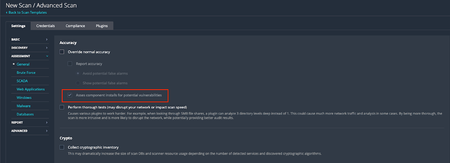
Background On Friday, February 6, 2026, Tenable Research published a plugin update that changed the way component installs are assessed for vulnerabilities. Those changes are outlined in a previous release highlight: Component Installs Require Paranoid Checks, This update essentially reverts this change, while adding new functionality to allow users to choose whether or not they want component installs assessed for vulnerabilities. Component installs are no longer influenced by scan paranoia settings. What are “Component Installs”? Software components, such as applications or language modules/libraries, are installed and managed by a primary "parent" package or application. The crucial point is that these components often cannot be updated individually. Instead, their vulnerability assessment and upgrade are entirely dependent on an update of the parent package. For instance, the SQLite database component is installed as part of the Trend Micro Deep Security Agent and is updated only when the Agent itself is updated. Nessus uses several factors to determine if a detected product is a component, or a standalone installation, including: Was the product installed by a package manager? These products are not considered components, as they are managed by the package manager and not a “parent” application Is the component a “language library”, i.e. a library or module used by the interpreter of a programming language like Python or Node.js? These enumerated libraries are marked as components by default. Does the product reside in a directory that is recognized for installations that are not component-based? Changes By default, component installs are once again assessed for vulnerabilities, as was the case prior to the release of the aforementioned update. If users wish to turn this setting off, so that component installs will not be assessed by generic vulnerability detection plugins, they can do so via the newly created scan preference. The end result of this change should be that fewer “false positives”, i.e. reported vulnerabilities for components that are “owned” by another application, are shown in scan results. Components with vulnerabilities that cannot be addressed independently of the “parent” application will not show in scan results. However, some customers have expressed a desire to see these vulnerabilities in their scan results anyway, to ensure full awareness of the risk profile of every application in their environment. This is still possible through the updated scan configuration settings. To modify this setting in your scan policy, go to Settings > Assessment > Accuracy > Override Normal Accuracy > Assess component installs for potential vulnerabilities. This setting is ON (checkbox is ticked) by default, so users must enable the Override Normal Accuracy checkbox (which is OFF / unchecked by default) if they wish to disable the setting and ensure that component installs are not assessed by generic vulnerability detection plugins in this scan. Please note that this update makes no other changes to the existing paranoia logic, outside of what is described above. For now, “Managed”, “Managed by OS” and “Backported” installs are still controlled by the Show/Avoid potential false alarms radio button. How can I tell if the detected install is a component or not? In addition to the above, we have also updated the relevant detection plugins so they will show if the component flag is set or not. At present, this includes detection plugins for OpenSSL, Curl, LibCurl, Apache HTTPD, Apache Tomcat, SQLite, Python Packages, Node.js modules and, soon to follow, Ruby and Nuget libraries. Using plugin ID 174788, SQLite Detection (Windows), here is a before and after example of the expected plugin output. Before: After: Expected Impact With the new default setting in place, users should anticipate an increase in vulnerability findings for the products in scope, returning to a level similar to what was observed before the first update. If users do not wish to surface these additional potential vulnerabilities, they should disable the "Assess component installs for potential vulnerabilities” setting. If the new scan preference is disabled, the volume of findings will remain consistent with current levels, when scanning with normal accuracy (paranoia) settings. Affected Plugins 12288, global_settings.nasl (updated to support the new scan policy preference) Any plugin that operates downstream of those in the list below: SQLite: 174788 - sqlite_nix_installed.nasl 171077 - sqlite_win_installed.nasl OpenSSL: 168007 - openssl_nix_installed.nasl 168149 - openssl_win_installed.nasl Curl: 182774 - curl_nix_installed.nasl 171860 - curl_win_installed.nasl LibCurl: 182848 - libcurl_nix_installed.nasl Apache HTTPD: 141394 - apache_http_server_nix_installed.nasl 141262 - apache_httpd_win_installed.nasl Apache Tomcat: 130175 - apache_tomcat_nix_installed.nasl 130590 - tomcat_win_installed.nasl Python Packages: 164122 - python_packages_installed_nix.nasl 139241 - python_win_installed.nasl Node.js Modules: 178772 - nodejs_modules_linux_installed.nasl 179440 - nodejs_modules_mac_installed.nasl 200172 - nodejs_modules_win_installed.nasl Targeted Release Date Tenable Nessus and Vulnerability Management: Monday, March 9, 2026 (ETA 22:30 Eastern Standard Time) Tenable Security Center: Monday, March 16, 20263KViews4likes11CommentsImproved Resource Management Control
Summary Improved resource management control for plugins leveraging Windows Management Instrumentation (WMI) on Nessus Agent 11.1.0 or higher. Impact Customers with Nessus Agent 11.1.0 and later versions will have the ability to granularly control the CPU resources consumed during scans. This update ensures that plugins respect the resource usage setting selected during scan configuration by launching commands as children of the Nessus Agent, rather than invoking them via WMI. The release of these plugins will continue through January, with a phased approach over three weeks. The first release will be January 13th, the second January 20th, and the final planned plugin update on February 9th. Target Release Date Phase 1 plugin set: January 13, 2026 Phase 2 plugin set: January 20, 2026 Phase 3 plugin set: February 9, 2026902Views4likes6Comments
Tenable Post-Quantum Cryptography Inventory Support
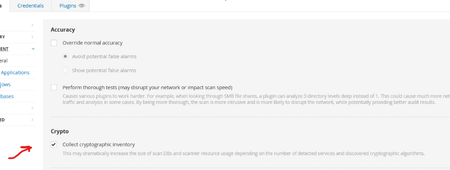
Summary The advent of quantum computing presents a significant threat to current cryptographic algorithms. Organizations worldwide are beginning the critical transition to post-quantum cryptography (PQC) resistant algorithms to ensure long-term data security. Government mandates, such as the U.S. National Security Memorandum 10 (NSM-10), outlines deadlines for PQC migration and specific actions agencies must take to migrate vulnerable systems. Our PQC support is designed to help customers inventory use of TLS and SSH quantum-resistant and vulnerable algorithms within their infrastructure using remote Nessus-based scans. Cipher Inventory and Reporting Post-Quantum Cipher Plugins Two remote-based scan informational reporting plugins for TLS and SSH protocols inform customers of their transition posture according to NIST Post-Quantum Encryption Standards. Services Using Post Quantum Cryptography: Reports on services equipped with at least one post-quantum cipher. It will specify which post-quantum ciphers were discovered, reporting by port and protocol. Services Not Using Post Quantum Cryptography: Reports on services that support no post-quantum ciphers. These plugins will be enabled by default and included in existing scans. Cryptographic Inventory Plugin Reporting To enable a JSON-based inventory of each target by service and cipher, enable through either a preference on your Advanced Network Scan or by running the Cryptographic Inventory scan template. These preferences will initially be supported in Nessus and Tenable Vulnerability Management. They are planned to be added to Tenable Security Center at a later date. Warning: Enabling this preference through the Advanced Network Scan is expected to increase the overall size of the plugin output per target and resulting Nessus database size. If you do not need to produce this inventory at all or on your regular scan cadence, it’s recommended to instead run the Cryptographic Inventory scan template to decrease the potential impact to your normal scan results. Options to Enable Inventory Reporting Advanced Scan Preference Post Quantum Cryptography Scan Template Cryptographic Inventory Plugin Details The plugin enabled with the preference or scan template is an information plugin called Target Cipher Inventory. Within the output of this plugin, you will find a JSON structure containing the TLS and SSH inventories for the scanned target. You can export this inventory based on plugin output using the Tenable API if needed. For TLS, the structure contains: Attribute Definition Encaps Protocol encapsulation employed such as TLSv1, TLSv2, TLSv3 Port Port used for TLS communication Curve Group Encryption method Ciphersuite Algorithm used to secure the TLS connection For SSH, the structure contains: Attribute Definition Proto Protocol of SSH Port Port used for SSH communication Name Algorithm used to secure the protocol Type Use of the named algorithm such as “message auth” Release Date Tenable Vulnerability Management and Tenable Nessus: December 8, 2025 Tenable Security Center: - December 8, 2025 for the informational plugins - Cryptographic Inventory scan template release to be determinedastranahan10 months agoProduct Team7.1KViews3likes4Comments
Cisco Meraki Integration
Summary Tenable is proud to announce our new integration with Cisco Meraki Dashboard. Cisco Meraki Dashboard is a centralized cloud-based platform used to manage and monitor Cisco Meraki devices. It provides a web-based interface for configuring, troubleshooting, and securing global network and IoT deployments. Tenable’s integration with the Cisco Meraki Dashboard API allows users to leverage our vulnerability management solutions against devices that are managed in their Meraki environment including security appliances, switches, routers, and other supported devices. Scope Customers using Tenable Vulnerability Management and Nessus Manager will be able to configure up to a maximum of five Cisco Meraki credentials in a single scan policy. The Cisco Meraki credential can be found under the "Miscellaneous" category of credentials. Detailed information about the integration and configurations can be found by visiting our integration documentation page in the link for Cisco Meraki. https://docs.tenable.com/Integrations.htm Plugins Plugins related to the integration can be divided into two categories; integration and supporting plugins. The integration plugins gather the credential settings, collect data from the Cisco Meraki API, and store this data for usage by the supporting plugins. Whereas supporting plugins detect the presence of Cisco Meraki devices and perform vulnerability detections against the device attributes; mainly primarily firmware. Integration Plugins Cisco Meraki Settings Cisco Meraki Data Collection Integration Status Supporting Plugins Cisco Meraki Detection Tenable Research will also release 6 initial plugins to detect Cisco Meraki versions vulnerable to several different high-impact CVEs. Please note that these plugins will require a paranoia level of 2 (“Show potential false alarms”). Impact The Nessus Scan Information plugin (plugin ID 19506) will report credentialed checks for Cisco Meraki devices through the use of the Cisco Meraki integration. Customers will see credentialed checks ‘no’ if a Cisco Meraki Device was detected while using the integration and the firmware version that we collected for the device is not configured or absent. Otherwise, customers can expect to see ‘yes, via HTTPS’ if successful. Release Date Tenable Vulnerability Management and Nessus Manager: July 3rd, 2025 Tenable Security Center: TDB675Views3likes0CommentsImprovement to Printer OS Fingerprinting
Updated: April 3, 2026 Summary Scanned printers will now have an OS artefact surfaced in their scan host metadata if the target has been identified as a printer when the “Scan Network Printers” policy option is disabled. This change will not cause any additional asset licenses to be consumed within Tenable VM or Tenable Security Center. Background Printers are notoriously unstable scan targets. Oftentimes, they can behave erratically when scanned, so some users prefer to avoid scanning them altogether. At present, there is a switch in the scan policies to prevent further scanning of a host when it's identified as a printer. To enable this setting, go to Settings -> Host Discovery -> Fragile devices - Scan Network Printers (Currently, this is a checkbox setting, default value “off”). With that said, how can the scanner know the target is a printer if it cannot be scanned? In reality, the scanner still performs very basic fingerprinting (usually via SNMP) in order to gather enough information to make an educated guess at the device type. When the scan target is thought to be a printer, it essentially gets marked as “Host/dead" in the scan KB. When this happens, the scanner will not perform any further active scanning. Changes With this update, the fingerprint used to identify the printer as such, will now be stored in the scan Knowledge Base (KB) so it can be processed by os_fingerprint2.nasl ("Post-scan OS Identification", plugin ID 83349) and surfaced as metadata in the scan result. The relevant policy setting located at Settings -> Host Discovery -> Fragile devices -> Scan Network Printers. With this update, the printer's OS information will now be surfaced if it is available, regardless of the selected value for this setting. Impact Users can now see the OS information for their printer devices that would have otherwise gone unreported if the scan is not configured to “Scan Network Printers”. As plugin ID 83349 generates no plugin output, only an “operating-system” tag will be added to the scan result (and stored in an exported .nessus file). This information will be visible only the in “Host/Asset Details” section of the Tenable product UI, i.e: Tenable Nessus: Scans -> [Folder] -> [Individual Scan Result] - > Host Details -> OS (sidebar) Tenable Vulnerability Management: Explore -> Assets -> [Asset] -> Details -> Operating System Scans -> Vulnerability Management Scans -> [Individual Scan Result] -> Scan Details -> Asset Details -> Operating System Tenable Security Center: Analysis -> IP Summary -> [IP address] -> System Information -> OS Scans -> Scan Results -> [Individual Scan Result] -> IP Summary -> [IP address] -> System Information -> OS Note, we expect this information to surface mainly in individual scan results. It would only be present in cumulative asset details if a licensed asset already exists for the target in question. This update will not cause additional assets to be created or consume any additional licenses. Affected Plugins 83349 - os_fingerprint2.nasl 11933 - dont_scan_printers.nasl 22481 - dont_scan_settings.nasl Targeted Release Date Wednesday, March 4, 20261.3KViews2likes2CommentsCisco Meraki API Host Guidance
Summary Tenable is announcing changes to our documentation for the Cisco Meraki API integration. Customers using a “unique” host in the “Cisco Meraki Host” field of the credential should use “api.meraki.com”, or a region-specific instead if applicable. Please refer to the documentation for full guidance. Tenable and Cisco Meraki Integration Guide Impact Customers using the Cisco Meraki API integration are encouraged to check their configurations and update them accordingly. This change in guidance addresses cases where some customers were experiencing HTTP 308 redirects, resulting in integration failures. This is also closely related to cases where customers were experiencing HTTP 403 errors, which has been addressed by changes in the Cisco Meraki API Web Application Firewall (WAF). Release Date Dec 15th, 2025584Views2likes1Comment
New Audit Attachments: Gold Image, XCCDF, and JSON Summary...
New Audit Attachments: Gold Image, XCCDF, and JSON Summary To support additional functionality and the export of compliance results, the following plugins have been developed: Compliance Export Gold Image Audit (174791) - a plugin that gathers the results of an existing compliance scan results and creates a “gold” image audit using the “known good” feature. The expected use of this feature is to scan a baseline target in your infrastructure, and then use the resulting audit to scan the rest of the targets to gauge how closely they match the baseline. This will replace the functionality that was previously provided by the python script at https://github.com/tenable/audit_scripts/tree/master/baseline. Compliance Export JSON (174790) - a plugin that gathers the results of an existing compliance scan and creates a JSON file attachment for each audit file that was executed on the scan targets. The JSON file will include data about the audit file, the scan, and the compliance results. The expected use of the files is to provide more precise export of compliance data from individual scan results. Compliance Export XCCDF (174792) - a plugin that gathers the results of an existing compliance scan and provides the results as an XCCDF format. The expected use of these files is to be imported into tools like STIG Viewer. A single XCCDF will be attached to the plugin for each audit file that contains DISA references. Each of these plugins will have to be enabled using the advanced general preferences found in the Policy Compliance Auditing and Advanced scan templates. The preferences names are: Generate gold image .audit Generate XCCDF result file Generate JSON result file When the plugins are enabled and compliance results have been generated, the results will become available in the Vulnerability category with the files attached to the plugin results. All preferences are turned off by default and recommended to only be used in instances where the attached files are required. Target Release Date Sep 15, 2023 Additional Notes Initial release is for Nessus and Tenable Vulnerability Management only. The preferences will be added to Tenable Security Center at a later date.bmcsulla3 years agoNot applicable1.2KViews2likes11Comments